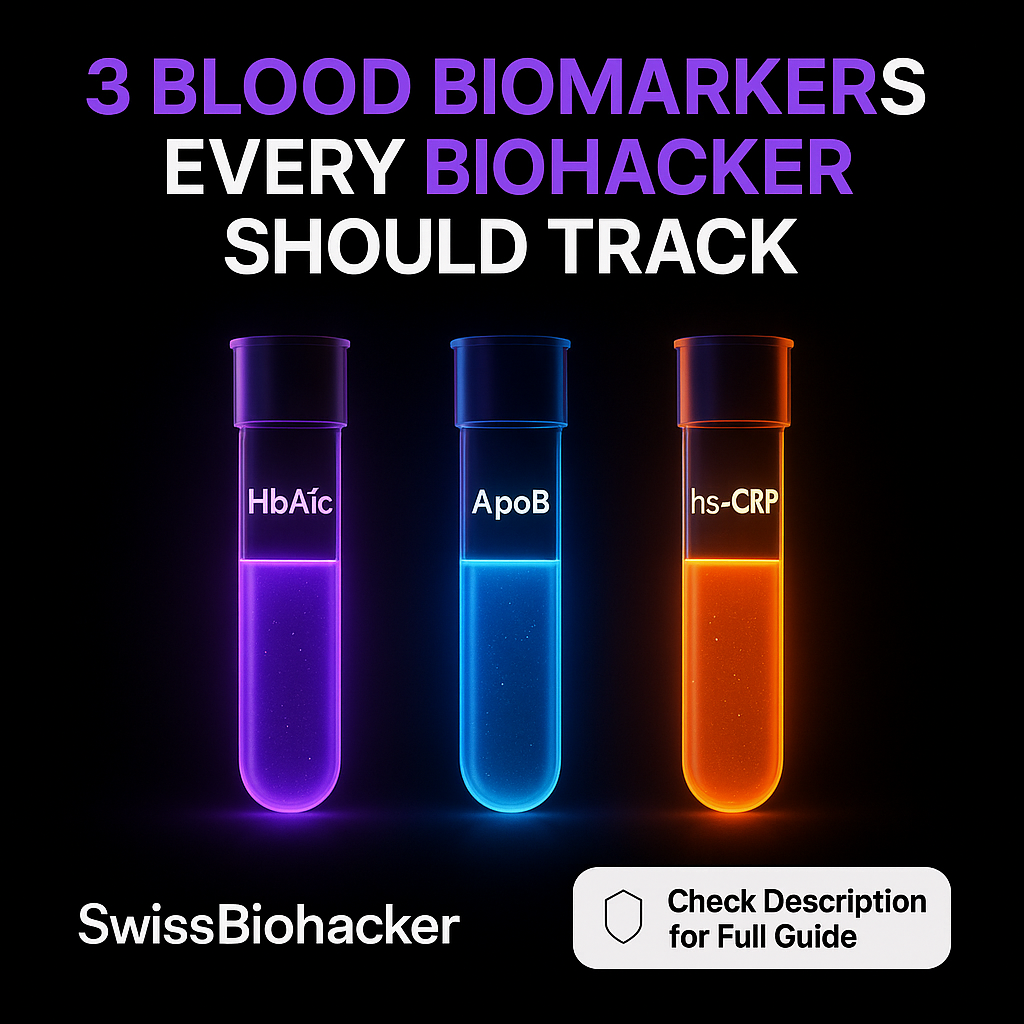
Your standard blood test misses the markers that predict disease 10 years out. While most people wait until symptoms appear, biohackers like Bryan Johnson track specific biomarkers that reveal what's happening at the cellular level.
Here are the three critical biomarkers you should add to your next blood panel — and how to get tested in Switzerland.
1. HbA1c — Blood Sugar Control
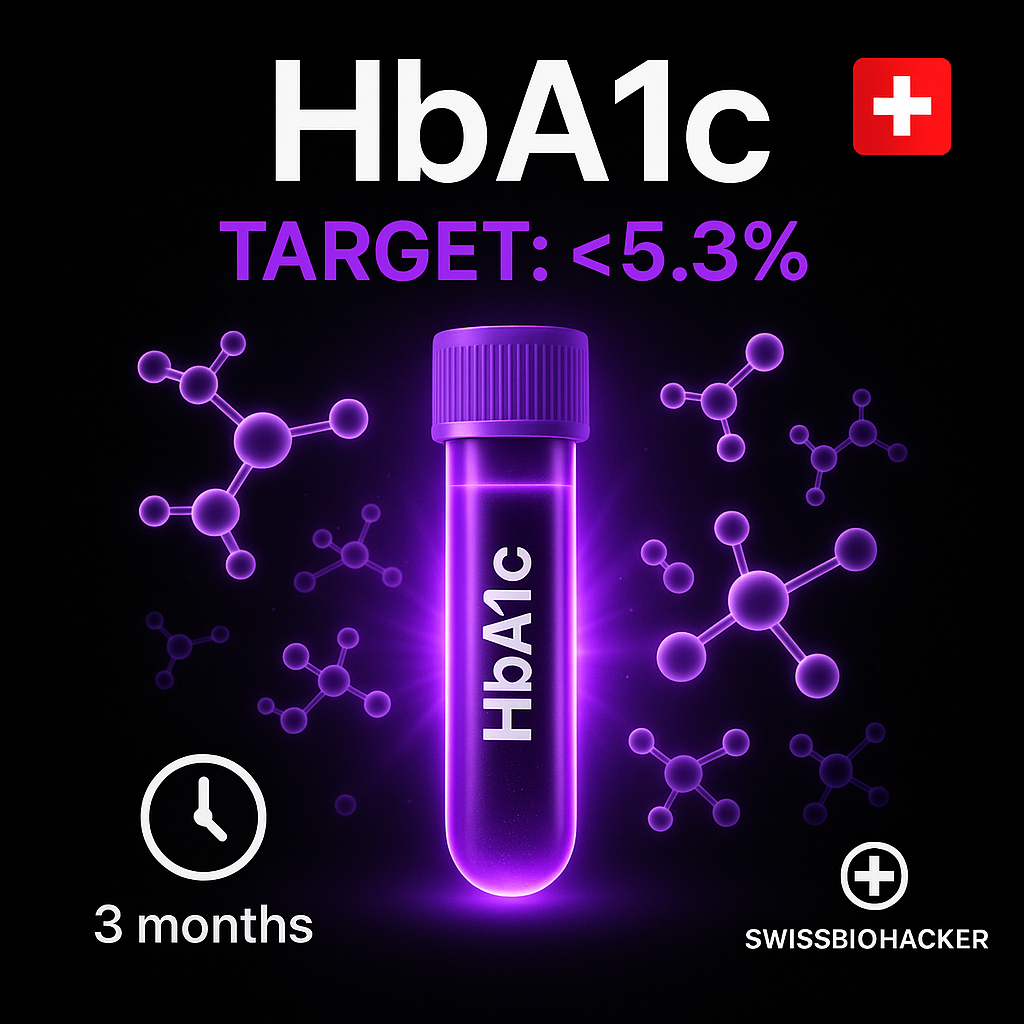
Optimal: <5.0%
What it measures: Your 3-month average blood glucose. Unlike a single fasting glucose test, HbA1c shows how well your body regulates blood sugar over time.
Why it matters: Predicts diabetes risk a decade before diagnosis. Even values in the "normal" range (5.7-6.4%) signal pre-diabetes and accelerated aging.
How to optimize:
- Limit refined carbohydrates (bread, pasta, sugar)
- Zone 2 cardio 3x per week (improves insulin sensitivity)
- Eat protein + fiber before carbs (slows glucose spikes)
- Consider continuous glucose monitoring (CGM) for real-time feedback
2. ApoB — Heart Disease Risk
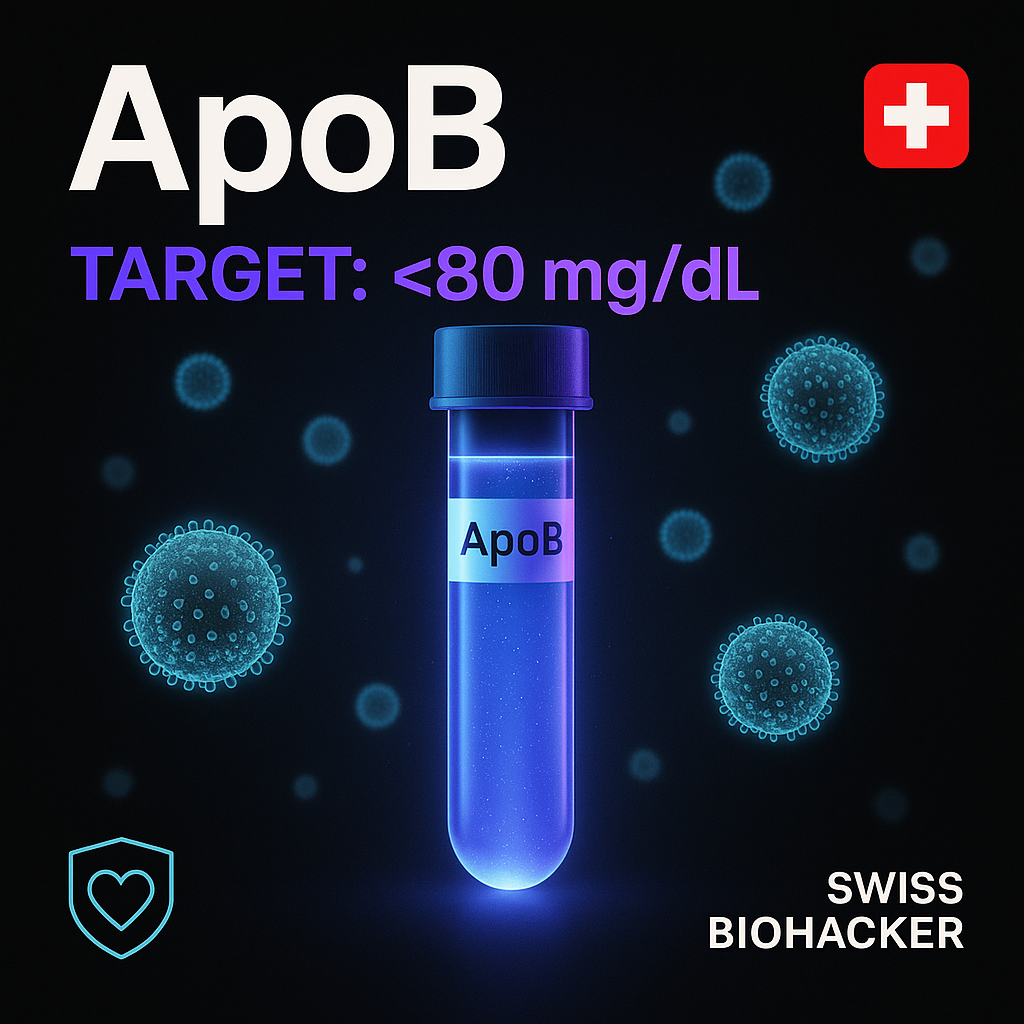
Optimal: <60 mg/dL
What it measures: The number of atherogenic particles in your blood. Unlike LDL cholesterol, which measures the amount of cholesterol, ApoB counts the actual particles that cause plaque buildup.
Why it matters: ApoB is the best predictor of heart disease risk. You can have "normal" LDL but high ApoB — meaning you're at risk even if your standard cholesterol test looks fine.
How to optimize:
- Cut saturated fat (butter, cheese, fatty meat)
- Add soluble fiber (oats, legumes, apples)
- Consider statins if genetic risk is high (discuss with your GP)
- Track response to diet changes (retest every 6 months)
3. hs-CRP — Inflammation

Optimal: <0.5 mg/L
What it measures: Systemic inflammation — the root cause of accelerated aging and chronic disease.
Why it matters: Chronic low-grade inflammation drives everything from cardiovascular disease to Alzheimer's. Even small elevations (1-3 mg/L) double your risk of heart attack.
How to optimize:
- Sleep 8 hours per night (inflammation spikes with poor sleep)
- Eliminate seed oils (canola, sunflower, soybean oil)
- Fish oil (EPA/DHA) 2-3g per day
- Manage stress (meditation, breathwork, sauna)
How to Get Tested in Switzerland

Ask your GP: "I want HbA1c, ApoB, and hs-CRP added to my blood panel." Most GPs will order these if you explain your interest in preventive health.
Insurance coverage:
Often covered by basic health insurance (Grundversicherung) if medically justified. Your GP can include them in a standard checkup if you explain why you're tracking them.
Private labs:
If your GP won't order them, private labs offer direct testing:
- Viollier — locations across Switzerland
- Synlab — major cities
- Medisupport — Zurich area
Total cost: ~CHF 150 for all three biomarkers
Swiss cities with lab locations:
Zurich, Geneva, Basel, Bern, Lausanne, Lucerne, St. Gallen
The Blueprint Approach

Test every 6-12 months. One-off values tell you where you are. Trends tell you if your interventions are working.
Track trends, not one-off values. Create a simple spreadsheet. Compare each result to the previous one. Look for directional improvement, not perfection.
Optimize for longevity, not "normal" ranges. "Normal" is average for the population — which includes people with chronic disease. Aim for optimal, not average.
What's your HbA1c? If you don't know, that's your first step. Get tested, track it, optimize it.